Rick’s Hobbies
Hang Gliding
Off the clock — Rick’s sky.
No tint in this one. No business either. This is what the founder does on his own time — the hobby that had him long before window film did. Rick Tallman has loved flight since he was a little kid who dreamed about it every night, and in his Florida years he stopped dreaming and learned how. This is his sky — and the phenomenal story of the sport he flies.
Rick’s sky
Rick learned to hang glide in Florida, around 1999–2000, in his tinting years there. His first taste of the sport came on instructional flights with James Tindle’s Miami Hang Gliding — the South Florida school Rick remembers as “Miami Ridge,” born over Biscayne Bay and flying today as The Florida Ridge Airsports Park, on the flat country between LaBelle and Clewiston. But the place that made him a pilot was Quest Air Soaring Center, on a little grass airfield at Groveland, Florida, that pilots still call Quest today. Quest was one of the birthplaces of aerotow hang gliding in America — the system where a slow, purpose-built tow plane pulls a hang glider up behind it like a kite, and lets go into the free air.
His first instructor was Dustin Martin. Let that name sit for a second. On July 3, 2012, Dustin Martin flew a hang glider 764 kilometers — 475 miles — from Zapata, Texas to near Ralls, Texas, in a single 11-hour flight. It is the FAI world open-distance record, and it still stands. The man who first taught Rick Tallman to fly went on to fly farther in a hang glider than any human being in history. Martin and Jonny Durand also launched from Quest itself in 2007 and flew 283 miles north into Georgia — the East Coast record, from the same grass Rick learned on. Some of Rick’s own first flights of over an hour happened at that park, behind Dragonflies — the Bailey-Moyes tug planes designed by Florida’s Bobby Bailey, a Quest local Rick met in those days, who built the standard tow plane for the whole world by solving the problem backwards: not speeding the glider up, but slowing the tow plane down.
Rick also flew at Wallaby Ranch, Malcolm Jones’s legendary Davenport flight park — the first and largest full-time aerotow park in the world, famous from the Today Show to Mike Rowe’s cameras. After 33 years, the ranch held its farewell in December 2024. It is closed now, and it is remembered the way it deserves: with love.
Ask Rick what flying is, and he won’t start with the records. He’ll tell you about the peace of it — being truly detached from the world, a mile up, at peace. He’ll tell you he feels closer to his father up there. He’s seen helicopters below him and airplanes above him. He’s seen grocery bags floating a mile high. And he’ll teach you the buzzards, the way a man who has shared thermals with them teaches it: a hang glider rides rising warm air — thermals — and glides from one to the next with no engine at all, exactly like the great soaring birds, who never flap because they don’t have to. The buzzards circle in those same thermals for two reasons, Rick says: to climb and ride — and to hunt. Their sense of smell is so sharp that the scents of the earth ride the warm air up to them, and when a circling buzzard catches the smell of something dead, it follows that smell down, the circle getting smaller and smaller and smaller, until it pinpoints its meal in the middle of nowhere. Graceful, patient, exact. That’s the air Rick flies in.
Fly it — Rick’s places
These are Rick’s fields. If the sky is calling you the way it called him, start here:
- The Florida Ridge Airsports Park — Clewiston, Florida. James Tindle’s Miami Hang Gliding, where Rick took his first instructional flights, still flies from this grass field between LaBelle and Clewiston. thefloridaridge.com
- Paradise Airsports at Wilotree Park — Groveland, Florida. Quest Air’s successor on the same Sheets Field grass where Rick learned — tandems and instruction, year-round. paradiseairsports.com · and for the story of the field itself: Quest Air at Sheets Field, remembered
- Wallaby Ranch — Davenport, Florida (1991–2024). Malcolm Jones’s ranch is closed now, after 33 years — the farewell was held in December 2024, and the land is sold. It isn’t linked for bookings, because there are none left to book. Hear Malcolm tell the ranch’s story in his own voice: Cloudbase Mayhem #247 — a lifetime love affair of the air
- USHPA — learn to fly. The national association’s own road in: ratings, schools, and how a first tandem works. How do I learn to fly?
The history of hang glidingThe sport behind Rick’s story — its history, its people, and its films. Open it up and dig as deep as you like.
The history of hang gliding
The first birdman. Hang gliding is older than the airplane. In the 1890s, German engineer Otto Lilienthal made close to 2,000 gliding flights from hills near Berlin, steering his gliders the way pilots still do — by shifting his body weight — and publishing the aerodynamic research the Wright brothers later built on. In August 1896 a gust stalled his glider; he fell, broke his spine, and died the next day. The sport’s first hero was also its first warning.
The wing that waited sixty years. In 1948, NACA engineer Francis Rogallo and his wife Gertrude patented a flexible cloth wing — the Rogallo wing — sewn first from kitchen curtain material. NASA tested stiffened versions as a recovery system for the Gemini space capsules, then shelved it. The design waited for its people.
Australia invents the modern glider. In September 1963, John Dickenson, building a releasable ski kite for a water ski club in Grafton, New South Wales, put it together: a Rogallo sail, a triangular control frame, wire bracing, and a pilot hanging in a swinging seat, steering by weight shift. Stable. Controllable. Every hang glider since is his descendant — the FAI eventually gave him its Diploma and its Gold Air Medal for inventing the modern hang glider. In 1967 Dickenson taught two Bills — Bill Moyes and Bill Bennett — and in 1969 Bennett brought the glider to America and flew it around the Statue of Liberty on the Fourth of July.
California, 1971: the sport is born in public. On May 23, 1971, pilots gathered at Corona del Mar for the first Otto Lilienthal Meet — the gathering hang gliding counts as its public birthday. National Geographic carried it to the world. Teenagers Chris and Bob Wills saw those photos, built a bamboo glider in three days, and in February 1973 founded the company that became Wills Wing; that October the brothers finished first and second at the first U.S. Nationals. Pilots soared Torrey Pines and raced at Escape Country in Trabuco Canyon. It was wild, young, and free — and then the bill came due.
The danger era, and the growing up. Early Rogallos could fall out of the sky in a luffing dive — the sail collapsing in a steep dive, lift and control gone together. Fatalities climbed; the media named it a death sport. Chris Wills’s younger brother Eric died in 1974; Bob Wills himself was killed at Escape Country in 1977, filming a commercial. The sport answered the only way it could: it grew up. The national association (today USHPA) built pilot ratings and training; by 1977 the manufacturers’ own HGMA was certifying gliders for structural strength and pitch stability in punishing tests; designers built stability into the wing itself with reflex and washout. The free-fall years ended because the pilots decided they would.
The wing becomes a machine. In 1980 Roy Haggard’s UP Comet hid the crossbar inside a double-surface sail and set the pattern every serious glider still follows. In the late 1990s carbon crossbars deleted the kingpost entirely — the sleek topless wings of the modern sport. Meanwhile the map changed: in Florida, designer Bobby Bailey’s Dragonfly (1990, built with Bill Moyes) made aerotowing practical anywhere the ground was flat, and flight parks like Quest Air and Malcolm Jones’s Wallaby Ranch (opened 1992, the first full-time aerotow park in the world) turned the flatlands into hang gliding country — the very world Rick learned in.
The record book. Distance became the sport’s measuring stick. Jerry Katz flew the first 100 miles in 1977; Larry Tudor broke 200 miles in 1983 and 300 in 1990. Austria’s Manfred Ruhmer, the dominant competitor of his era, flew 700.6 km from Zapata, Texas in 2001 — a record that stood eleven years, until Rick’s instructor took it: Dustin Martin, 764 km, July 3, 2012, still the world open-distance record. The women wrote their own book in the same sky: Britain’s Judy Leden, world champion in 1987 and 1991, who in 1994 dropped from a balloon at 41,307 feet for the altitude record; and American Kari Castle, three-time world champion, the first woman past 200 miles, who flew 403.5 km from Zapata in 2001. A world championship was flown at Kössen, Austria in 1975 — won by American Dave Cronk — and the first FAI World Championships followed there in 1976; the Worlds run every two years to this day.
The people
- Otto Lilienthal — the first true glider pilot; ~2,000 weight-shift flights in the 1890s; died for the data.
- Francis & Gertrude Rogallo — patented the flexible wing in 1948; NASA’s space program carried it, then the sport did.
- John Dickenson — Australian inventor of the modern hang glider, 1963: control frame, swinging seat, weight shift.
- Bill Bennett — carried Dickenson’s glider to America; flew the Statue of Liberty, July 4, 1969.
- Bill Moyes — Australian pioneer, Moyes Gliders founder, co-creator of the Dragonfly tug; FAI Gold Air Medal.
- Chris & Bob Wills — founded Wills Wing in 1973, finished 1–2 at the first U.S. Nationals; Bob was killed filming in 1977.
- Roy Haggard — his 1980 UP Comet set the double-surface pattern the sport still flies.
- Bobby Bailey — Florida designer of the Dragonfly, the tow plane that made the flatlands flyable; a Quest Air local.
- Malcolm Jones — built Wallaby Ranch, the world’s first full-time aerotow flight park; 30,000+ tandem flights in the ranch’s telling.
- Larry Tudor — first man past 200 miles (1983) and 300 miles (1990); ten FAI world records.
- Judy Leden — two-time women’s world champion; 41,307-foot balloon-drop altitude record, 1994.
- Kari Castle — three-time women’s world champion; first woman past 200 miles; 403.5 km from Zapata, 2001.
- Manfred Ruhmer — Austria’s champion of champions; 700.6 km world record, 2001, held eleven years.
- Dustin Martin — Rick’s first instructor; 764 km from Zapata, July 3, 2012 — the world open-distance record, still standing.
Watch the best in the world
The history above is the sport’s past — this is its living present. World champions, world record holders, and the pilots whose own films carry hang gliding to the world. Every film below is the real thing: the pilot’s own flying, on their own channel wherever they keep one, and honestly credited where the film lives with their team.
Featured — the farthest flight in hang gliding history: Dustin Martin’s world record, 764 km from Zapata, Texas, July 3, 2012 · via Wills Wing
Dustin Martin — the record holder
Rick’s first instructor at Quest Air — and the man who flew farther in a hang glider than anyone in history. His 764 km world open-distance record, flown in a single 11-hour flight, still stands.
Wills Wing on YouTube — home of Dustin’s record film
Jonny Durand — surfing the sky
Australia’s finest: ranked number one in the world, a Red Bull pilot, and Dustin’s great rival and friend — the two of them duelled all day over Texas on record day in 2012. Jonny is also the man who surfed the Morning Glory, a rolling cloud like a tsunami in the sky, looping along its face over Burketown.

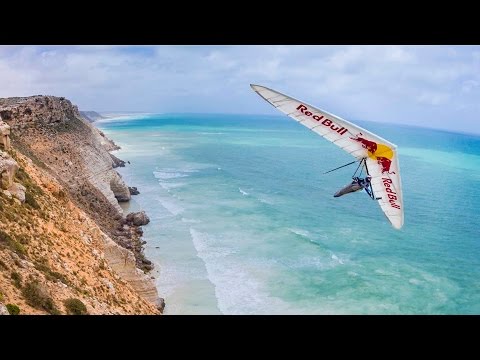
Jonny’s films fly with Red Bull and the Moyes team — the Morning Glory film above is his own.
Wolfgang Siess — the showman
Austria’s professional hang glider pilot — “Wolfi” to the whole sport — a competition pilot and tandem instructor who films like nobody else alive: speed runs, swoops, and sunset lines shot from the wing. His channel is hang gliding’s great front-row seat.

Zac Majors — America’s champion
Six-time U.S. National Champion who helped Team USA to silver at the 2011 World Championships — and the pilot who threaded his glider through Wilson Arch in Utah, a hole in the rock most pilots would only fly around.
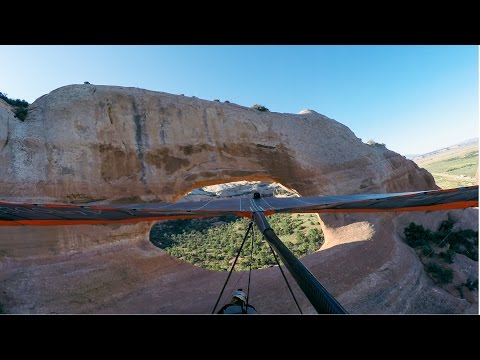
GoPro on YouTube — home of Zac’s Wilson Arch film
Manfred Ruhmer — the champion of champions
Four-time Class 1 world champion, four-time European champion, and seven-time world champion in the rigid Class 2 with his Swift — and before Dustin, the record was his: 700.6 km in 2001, a mark that stood for eleven years. Here he is at play over Famara, Lanzarote, looping his Swift a few feet above the waves.

Manfred designs and test-flies for Icaro 2000 in Italy — his flying surfaces wherever the team films.
Christian Ciech — champion and craftsman
World champion at Valle de Bravo in 2015, and a champion who also builds the wings: Christian is a designer and test pilot at Icaro 2000, the Italian house whose Laminar gliders have carried champion after champion. Here he talks helmets, safety, and a life at the very top of the sport.

Paragliding Atlas on YouTube — home of the Ciech conversation
Ryan Voight — the teacher
The youngest pilot ever to earn the H5 Master rating, and America’s beloved hang gliding teacher — Ryan’s instruction films have started more pilots on the road to the sky than anyone’s. Watch how he teaches a first lesson, then watch him float over Utah on a perfect day.


More of the greats
- Petr Benes (Czechia) — the reigning world champion: gold at the Worlds in Brasília in 2017, and gold again at Àger, Spain in 2025, after six years away from the sport. The man to beat right now.
- Alex Ploner (Italy) — four-time world champion (2009, 2011, 2019, 2023), the defining competition pilot of his generation, still standing on podiums in 2026.
- Primoz Gricar — World Championship bronze medalist in 2011 and again in 2019, a racer’s racer who has flown at the front of the world fleet for two decades.
- Kari Castle (USA) — three-time women’s world champion and 14-time U.S. national champion; in 1991 she flew 335.8 km to become the first woman past 200 miles in a hang glider.
Different countries, different wings, one sky — and every one of them flying the descendant of the same cloth wing a NASA engineer sewed in 1948. That is the company Rick’s hobby keeps.
History sources: USHPA, the FAI record files, the Smithsonian National Air and Space Museum, NASA’s Rogallo papers, Wills Wing and Moyes histories, and the verified research files of the WFR biography project. Where a date or a distance is printed here, it is printed because a source stands behind it.