 WFR FOR MY CARREVOLUTION RENEWED
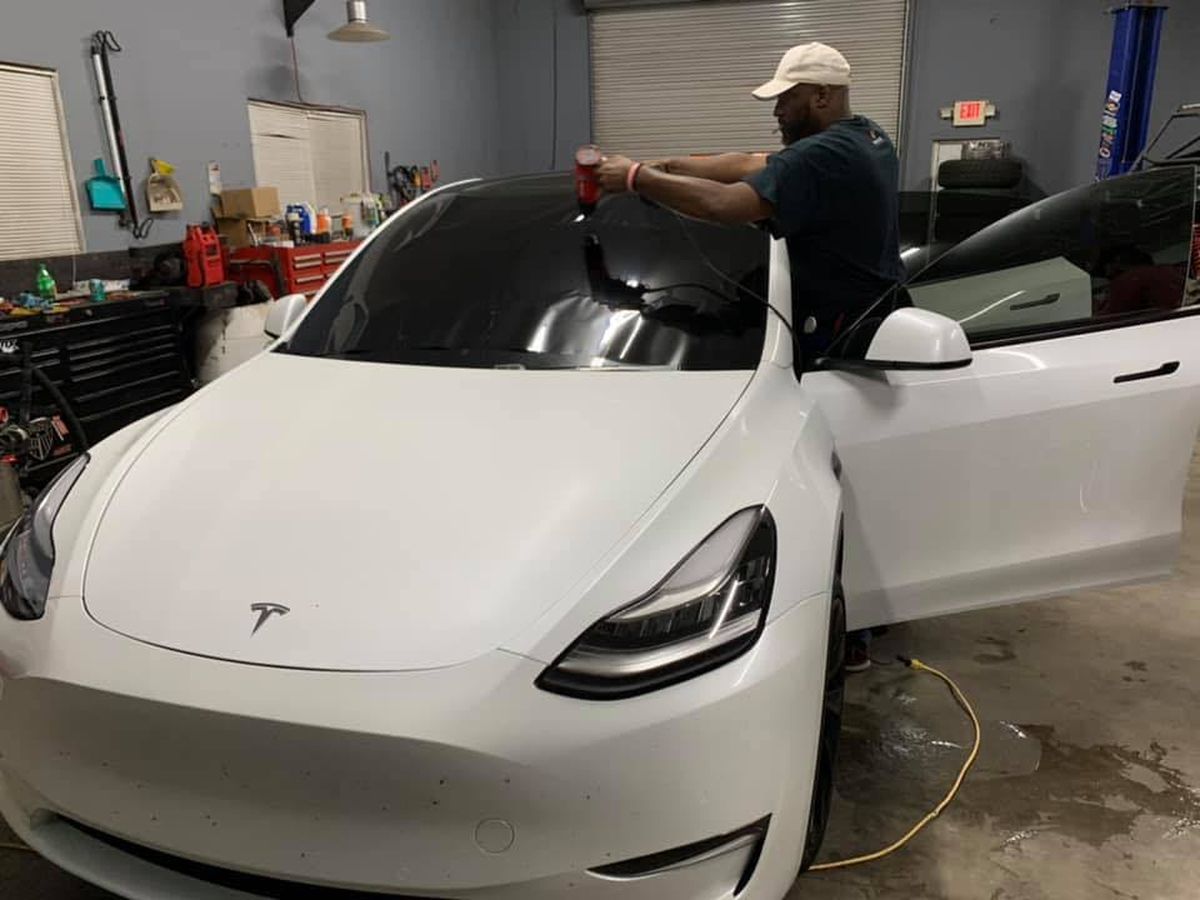
Not all window tint is created equal. Here's what separates a budget film from a premium one — and why the difference matters for your car, your comfort, and your wallet.
The most affordable option. A dye layer absorbs solar energy and gives glass a darkened look.
Tiny metallic particles reflect heat away. Strong performance with a distinctive reflective shine.
Carbon particles deliver strong heat rejection with a rich matte-black finish that won't fade.
Nano-ceramic technology blocks maximum heat and UV without darkening glass or interfering with signals.
Quality film can reject a large share of solar heat, keeping your cabin cooler and cutting AC strain.
Blocks up to 99% of harmful UV rays — protecting your skin and stopping your interior from fading and cracking.
Cuts harsh sunlight and headlight glare for more comfortable, safer driving day and night.
Darker shades keep valuables out of sight, and film holds shattered glass together in an accident.
Let's be honest — a clean tint job just looks good. It's one of the most cost-effective appearance upgrades there is.
Less AC use means less fuel burned (or less battery drained). Your car works less to stay cool.
Film for Homes & Buildings
Cars are only half the glass in your life. The film that goes on homes, storefronts, schools and offices is a different toolbox — solar film, safety film, security film, decorative film, anti-graffiti film, and the systems that anchor them to the frame. Here is every tool in it: what it is, how it works, what it honestly does, and what it does not do.
What it is. Solar film (sun control film) is the flat-glass workhorse: a polyester film applied to existing windows that turns away part of the sun's energy before it becomes heat inside. It works two ways at once — reflecting part of the energy back out, and absorbing part of it. That absorbed share matters, and it is why the film has to be matched to your glass (see "Before you sign" below).
The three numbers that actually matter
Trustworthy numbers are measured under standard test methods (the NFRC — National Fenestration Rating Council — rates window film performance). If a spec sheet will not say how its numbers were measured, treat the numbers as advertising.
UV and the fading truth
Quality solar film blocks up to 99% of ultraviolet light — and UV is the largest single cause of fading, about 40% of it by the breakdown the industry's own researchers publish. But visible light causes roughly another 25%, and solar heat another 25%, with humidity and the materials themselves making up the rest. So here is the honest version: film slows fading dramatically, and no film stops fading completely. Anyone who promises "your floors will never fade" is selling, not informing.
The winter half nobody talks about
Some solar films are low-emissivity ("low-E") films: a special layer reflects the room's own heat back inside instead of letting it escape through the glass. The leading maker's way of putting it: a low-E film can make a single-pane window insulate close to a double-pane, and a double-pane close to a triple — and the same film still rejects heat in summer. Film is a year-round product in cold country, not just a summer one.
What solar film does not do
What it is. Safety film is a clear polyester film — safety-class products start around 4 mil thick, well beyond tint — bonded to glass so that when the glass breaks, the film holds the pieces together as one sheet instead of letting them fall as loose, heavy shards.
The danger it answers
The worst glass injuries rarely come from burglars. They come from a person falling into glass — a sliding door, a sidelight, a shower enclosure, a low window on a staircase. Building codes call these "hazardous locations" and require safety glazing in them for exactly that reason. Film's safety job is to make ordinary glass behave like safety glass when a body hits it.
The standards, in plain words
Two standards run this world: ANSI Z97.1 and the federal safety standard CPSC 16 CFR 1201. They test filmed glass by striking it with a weighted impactor — Category I works out to about a 150 ft-lb impact, Category II to about 400 ft-lb — and they judge how the glass breaks. A film-and-glass combination tested to these standards can bring regular glass up to safety-glazing performance. Safety film also earns its keep in quieter moments: tempered glass can, rarely, shatter on its own from flaws inside the pane, and film keeps that sheet in the frame instead of raining it down — a real concern over storefronts, skylights and railings.
What the ratings do not mean
Security film is not bulletproof. It never was. The biggest manufacturer in this business prints that warning in capital letters on its own spec sheets, so we will say it just as plain: no window film stops a bullet, and no window film is designed to stop a determined intruder. What it does is real — and it is this:
What it is. Security film is safety film's heavier brother — films starting around 8 mil and running far thicker, with aggressive adhesive, built to keep broken glass in the frame under repeated blows. An attacker who shatters filmed glass does not get an open hole; they get a tough membrane they have to tear, beat and claw through, one loud second at a time.
What that buys you
The limits, stated the way they should be
Sold honestly, security film does not need the exaggeration. It holds glass together, it delays the wrong person, and it buys the right people time. That is a serious product — it is just not a bulletproof one.
Here is the single most important thing to understand about safety and security film: the film is only half the product. The other half is how it connects to the frame.
Picture an unanchored security film doing its job perfectly — the glass breaks, the film holds every shard together… and then the whole filmed pane pushes out of the frame as one piece, because nothing ties the film to the frame. The sheet held. The system failed. There are three levels of install, and knowing which one you are being quoted is the difference between buying protection and buying a poster.
Level 1 — Film only
The film stops at the edge of the glass ("daylight" install). Right and proper for solar, privacy, decorative work, and for safety film whose job is holding broken glass together. It is not, by itself, a break-in system.
Level 2 — Wet-glaze anchoring
A bead of structural silicone — the class of sealant installers know by products like Dow 995; 3M sells its own version as its Impact Protection Attachment sealant — is tooled around the edge, bonding the film to the frame. Now when the glass breaks, the frame itself holds the filmed sheet in the opening. This is the standard security upgrade, and it is not optional decoration: manufacturers require an attachment system for their security films in break-and-entry, windstorm and blast applications.
Level 3 — Mechanical attachment
Metal profiles or battens physically clamp the film's edge to the frame with screws. The strongest class of system, used where high-security and blast specifications demand the most the frame can give.
The question that tells you who you are dealing with: "Is my film anchored — and how?" A security quote that never mentions attachment is quoting you a sheet, not a system.
What it is. Decorative film is film as design: frosts, etched-glass looks, gradients that fade from opaque to clear, stripes, patterns, and custom-cut graphics — logos, branding bands, hours on a storefront door.
What it does well
The honest limits
What it is. A clear film — commonly 4 to 6 mil — installed on the outside of glass and other smooth surfaces (mirrors, stainless steel, display panels) as a sacrificial skin. It is optically clear: nobody sees it. It just takes the hit.
What it takes
Spray paint. Markers. Key and scribe scratches. Even acid etching — the vandal's trick that permanently scars bare glass in seconds lands on the film instead.
Why it is a category of its own
When a protected pane gets tagged, the crew peels the damaged layer and lays a fresh one: a service call instead of a glass replacement, at a fraction of the cost and none of the wait. That arithmetic is why anti-graffiti film lives on storefronts, buses and trains, schools, elevators, restrooms and display cases. As a bonus, it also holds broken glass together.
What it does not do
First, the glass
Film goes on glass, and glass is not all the same. Tempered glass, heat-strengthened glass, ordinary annealed (float) glass, laminated glass and insulated double-pane units each handle heat differently — and solar film changes how a pane handles heat, because the film absorbs energy the bare glass used to pass through. The sunlit middle of a pane gets hot while the frame-shaded edges stay cool, and that fight between hot and cool — thermal stress — can crack a susceptible pane. Tempered glass shrugs off almost any film. Annealed and laminated glass are where the risk lives, and big panes, partial shading and damaged edges raise it.
Two truths keep this in proportion: film rarely breaks glass by itself — it exposes flaws that were already there — and the risk is managed by matching, which is why every major manufacturer publishes a film-to-glass compatibility chart. So the first question a real installer answers is not "what film?" but "what glass do you have?" Ask it. And ask one more: "Will filming my windows affect my window manufacturer's warranty?" Some window makers treat filmed glass differently — far better asked before the install than after.
Some film is sold through a locked door — on purpose
Premium architectural lines are often closed-market. 3M's architectural sun control and safety & security films are the documented case: they can only be bought, installed and warrantied by a dealer holding a written contract with the manufacturer — an individual calling himself "certified" cannot even purchase them. Dealer tiers with names like 3M Prestige, Eastman SelectPro and Solar Gard Panorama are real credentials behind that door, carrying training, facility and insurance requirements. Ask which tier a shop holds, and ask them to show it.
The warranty is a chain
A film warranty runs manufacturer → authorized dealer → your registered installation. Break a link and the paper can be worthless: an unauthorized install can leave you holding a warranty nobody honors. So get the actual warranty document in your hand before you sign — what it covers, how long it runs, what voids it, and what glass-breakage coverage comes with your film.
The vetting checklist (the trade association's own advice, in plain form)
After the install — caring for film
Fresh film cures as the mounting moisture under it dries out. A little haze or a few small water pockets in the first days are normal and clear as it cures — give it up to 30 days before judging the job (thick safety and security films can take longer). Do not wash the film during the first month unless your installer tells you otherwise. After that, it is simple: a soft cloth, mild soap and water. Never ammonia-based cleaner — over time it attacks the adhesive — and never anything abrasive. Judge the finished job the way the industry's own visual standard does: standing back in normal daylight, not with your nose on the glass.
Deeper Glass
The seven folds above are the working toolbox. These are the chapters most film sites skip — film that changes state on its own or on a switch, glass that birds can finally see, security film where it matters most, the myths that refuse to die, and the honest money math. Same rules as everything above: what it does, and what it does not do.
Two different tricks get sold under one word, "smart." One kind of film changes by itself when the sun hits it. The other changes when you flip a switch. They work differently, fail differently, and cost very differently — so here they are separately, with the limits attached.
Transitional (photochromic) film — the sun works the switch
Photochromic film carries light-sensitive molecules that rearrange under ultraviolet energy and absorb more visible light as the sun gets stronger — the same family of chemistry as eyeglasses that darken outdoors. The named, specified product in this class is CoolVu Transitional: a photochromic layer over a fixed ceramic solar film, sold in grades that run from the mid-50s percent of light in their clear state down into the teens and twenties when fully darkened (CoolVu publishes paired clear/dark numbers per grade — read the datasheet for the grade you are quoted). Darkening starts within about 30 seconds of strong sun and builds over roughly 2–3 minutes; when the UV goes away, the film relaxes back clear over several minutes. The solar layer underneath works in both states, and CoolVu states 99%+ UV blocking clear or dark. The limits, plainly:
Switchable (PDLC) film — the clickable one
PDLC — polymer dispersed liquid crystal — is a film with liquid-crystal droplets suspended between conductive layers. With no power, the crystals sit scattered and the glass looks frosted. Apply low-voltage AC power and the crystals line up: the glass goes clear. Standard PDLC therefore works backwards from what most people guess: clear costs power, privacy is the resting state — cut the power and the glass goes private on its own. Rayno Smart Film is the film-industry name here: Rayno publishes a switch in under 0.05 seconds, 99% UV and 65% IR block, and sheets up to roughly 4 × 16 feet that can be cut and combined. Smart Tint and Gauzy publish full spec sheets in the same class — driving voltages in the tens of volts AC, power draw in the low single-digit watts per square metre (it sips power; the wiring and controller are the real job), and Gauzy publishes endurance figures above 18 million on/off cycles. The limits, plainly:
SPD and electrochromic — real, but they are glass, not film
SPD (suspended particle device) dims glass from clear down to near-dark while keeping the view out — it shades; it does not frost, and its own maker, Gauzy, says it is not a privacy product on its own. Today SPD ships laminated inside factory glass (it is the dimming roof technology in high-end production cars), not as a film a shop applies to your existing windows. Electrochromic glass — SageGlass is the reference name — tints itself through a range its maker publishes at 60% of light down to 1%, driven by a small electrical charge inside a sealed factory unit. Also new glass, not a retrofit film.
The costume warning. Most of what is sold online as "electrochromic film" that sticks onto glass and turns frosted is PDLC wearing a costume — check the behaviour: if it switches clear-to-frost, it is liquid crystal, whatever the listing calls it. And thermochromic film (changes with heat) is a laboratory technology today — interesting research, not a product you can buy with a warranty. If a quote promises either miracle, make them show you the manufacturer's own datasheet.
The problem is not small. Estimates compiled by the Smithsonian Migratory Bird Center and the U.S. Fish & Wildlife Service put bird deaths from building glass in North America between 365 million and one billion birds a year. Birds do not read glass as a wall: they read the reflection of sky and trees as more sky, and clear glass as an open flight path — and they fly at both.
What actually works — and where it has to live
The fix is a visible pattern on the outside surface of the glass: dots, stripes or frit-style markings dense enough that a bird reads the pane as a barrier. The spacing guidance used by bird-conservation research is markings no more than about 2 inches apart horizontally and 4 inches vertically. Exterior-applied patterned film does this as a retrofit — the pattern can be subtle dots that read as a design feature from inside, and the same technology is now written into bird-safe building rules in a growing list of cities for new glass.
The limit that decides everything: interior film does nothing for birds. A bird approaching from outside sees the outer surface — its reflections and whatever is printed on it. Tint, frost or graphics on the inside face leave the mirror intact, and the mirror is what kills. Any bird-safety claim for an inside-applied product is a claim to walk away from.
The documented proof case
Chicago's McCormick Place Lakeside Center — roughly 120,000 square feet of glass on a migration flyway — lost nearly 1,000 birds in a single night in October 2023. In 2024 its glass was treated with a dot-patterned exterior film. In the monitored migration season that followed, reported bird deaths at the building fell by about 95%, tracked by the Field Museum's long-running collision monitoring and reported by WTTW. One building does not settle a science — but a before-and-after that size, counted by the people who had been counting the dead birds for years, is what a documented result looks like.
Start with the doctrine every serious school-security plan uses: film is one layer, never the plan. Doors and access points are secured first; glass is addressed next; and the film sits inside a system that also includes locks, controlled entry, cameras, staff training and a rehearsed response plan. Anybody who sells a school a film-only answer has told you they are not serious.
What the film layer honestly adds
The limits, one more time, because this is where they matter most. Security film delays entry; it does not deny it — a determined attacker with time and tools gets through, which is exactly why it must be one layer among many. It is not bulletproof (see the Security film fold above — the largest manufacturer in the business prints that warning on its own spec sheets). And it only performs as a system: film matched to the glass, anchored as the manufacturer requires, installed by people who do this work — specified and tested, not hoped for.
"Film will make the room dark." Before film, most sun-blasted rooms live with the blinds closed — the daylight was already gone, surrendered to the heat. Film rejects the heat at the glass, the blinds come up, and rooms routinely end up brighter in daily use. Films also run from nearly clear to blackout-dark; darkness is a choice on the spec sheet, not a side effect.
"Film breaks glass and kills window seals." Film matched to the glass by the manufacturer's compatibility chart is the managed, warrantied normal case — that chart exists for every major brand, and reputable makers back glass-breakage and seal-failure coverage on approved applications. Breakage stories trace to mismatched film on the wrong glass, which is an installer failure, not a film property.
"Security film is bulletproof." It is not, it never was, and the biggest maker in the business prints that in capital letters on its own datasheets. It holds glass and buys time. Full treatment in the Security film fold above.
"Privacy film gives me privacy around the clock." Reflective and dual-reflective privacy runs on whichever side is brighter. By day, that is outside — you are hidden. By night, with your lights on, it reverses. Around-the-clock privacy is frost or blackout film, with its own trade-offs (see the Decorative fold above).
"Film stops fading." Nothing applied to glass stops fading completely. Ultraviolet is only about 40% of the cause — visible light and heat split most of the rest — which is why the honest products say "slows dramatically," and why anyone promising "fade-proof" is selling you a word, not a film.
"The darkest film is the best film." Darkness is just VLT. The real contest is heat rejected at the same lightness — a nearly clear spectrally selective film out-rejecting a dark dyed film is the state of the art doing its job. Compare TSER at equal VLT or you are comparing sunglasses by how black they look.
"Any tinter can get any film." The premium architectural lines are closed-market: some of the best-documented (3M's architectural range) can only be purchased by dealers holding a written manufacturer contract. A shop's inability to buy a film is not a supply problem — it is the credential system working as designed (see "Before you sign" above).
Why film and window treatments are not substitutes
Blinds, shades and curtains work after the sun's energy is already inside the room — a blind converts light to heat at the window and radiates a share of it into the space anyway. Film works at the glass, turning energy away before it becomes indoor heat. Two more differences matter: film keeps the view and the daylight (a blind's privacy and glare control cost you both), and the sun damages the treatments themselves — drapery and shade fabrics fade and rot behind unprotected glass, which is why filmed glass protects the blinds too. The honest verdict: treatments decorate and give blackout control; film performs. Many good rooms use both, for different jobs.
The money side — what we will and will not print
*Metallic films can interfere with cell, GPS, and radio signals in some vehicles. Ask your installer.
How Window Film Is Made
It looks like a single sheet of tinted plastic. It isn't — it's a sandwich, and every layer in the stack earns its place.
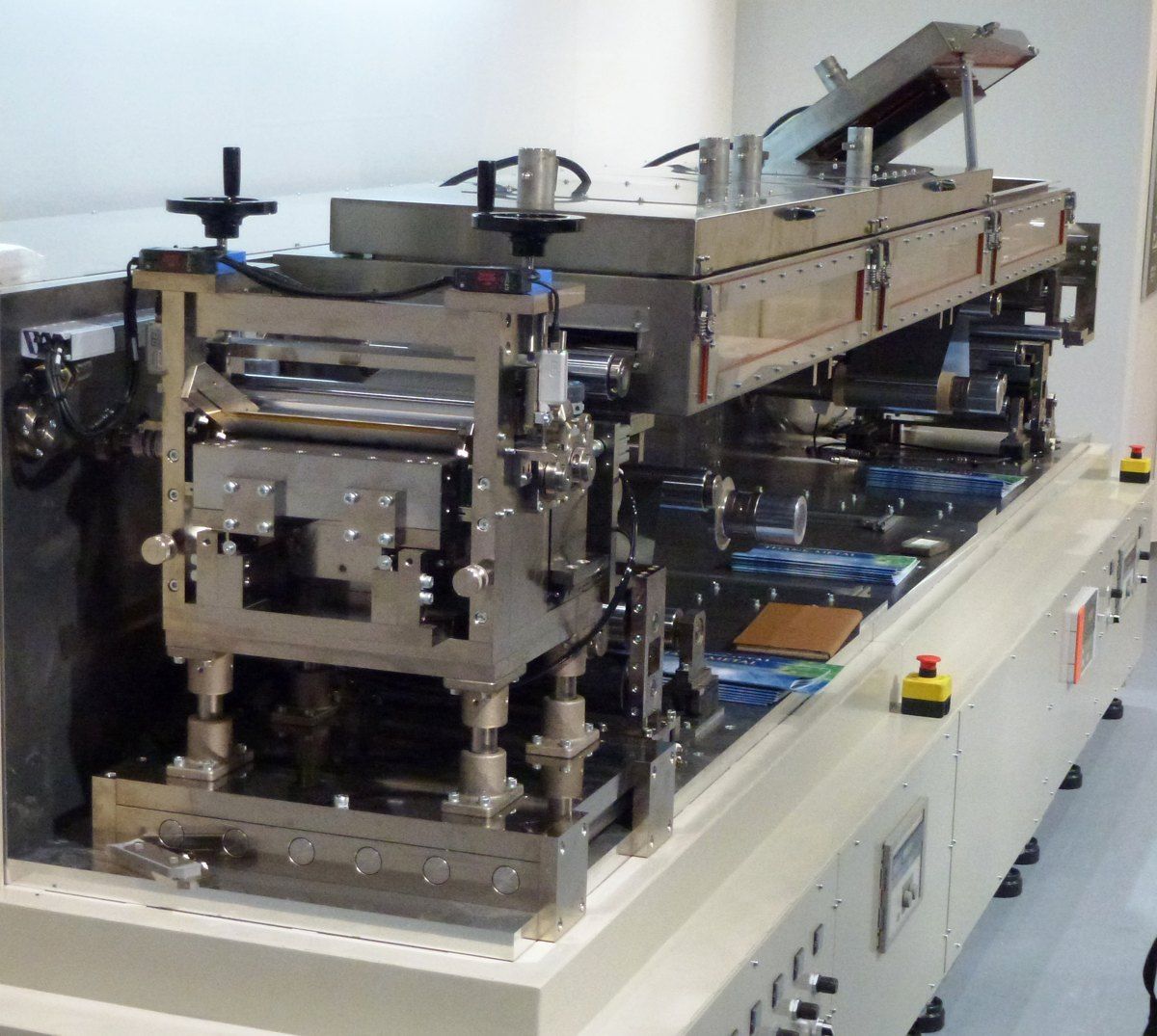
The foundation is a polyester base called PET: crystal-clear, and stretched in two directions until a sheet thinner than paper becomes stubbornly hard to tear. On top of that base, the factory builds the sandwich. A scratch-resistant hard coat faces the room. The working layers sit in the middle — dye for shade, metal deposited vapor-thin for reflection, or nano-ceramic particles that reject heat without any metal at all. Laminating adhesive bonds the plies together. A mounting adhesive — with ultraviolet blockers mixed right in — is what grips your glass for years. And a throwaway liner protects the whole stack until the day it's installed.
Now the part nobody tells you. While those giant rolls run through the factory, they charge themselves with static electricity. Every pass over a roller is touch-and-separate, touch-and-separate, building charge the whole way — and a charged web pulls dust out of the air like a magnet. One speck sealed under a coating is a defect that lives in that film forever. So the factories fight the charge constantly, running ionizing bars along the line that wash the film in balanced ions and cancel the static before it can grab anything. The clean, flawless film on your window? It's the roll that won that fight.
How is Window Film Made? — Armolan, a window-film maker, walks through its own process. Tap to watch it right here.